
PRP: when it may help
PRP is an injection treatment using plasma from your own blood. It may be an option for certain conditions, following a diagnosis, an assessment of alternatives and a discussion of the expected benefit.
What is PRP?
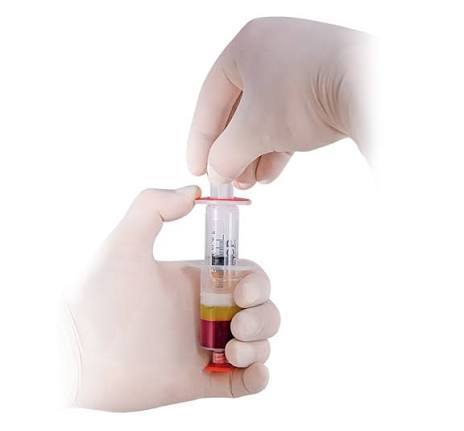
PRP stands for platelet-rich plasma. A blood sample is centrifuged to prepare the material that is injected into the selected area. Platelets contain growth factors involved in healing processes.
It is neither cortisone nor stem cell therapy. Composition differs between preparation systems; the same name does not always mean the same product or protocol.
When is it considered?
Knee osteoarthritis
It may be discussed for selected patients with early to moderate knee osteoarthritis (In Greek), when previous non-surgical treatment has not helped enough. It is not automatically the first treatment. Expectations should be particularly cautious in advanced arthritis.
Tendon conditions
It is considered for some persistent tendinopathies. The evidence differs by tendon and condition: a possible benefit in one area does not automatically apply to the shoulder, elbow or every sports injury.
What it can — and cannot — promise
The aim is to improve pain and function, not to guarantee the restoration of worn cartilage. Studies have produced differing results and scientific recommendations are not uniform. Patient selection, the severity of the condition and the preparation matter.
A decision requires an explanation of this uncertainty, other available treatments, such as hyaluronic acid where considered, and the total cost. PRP is not a promise of avoiding surgery.
The branded Arthrex ACP system
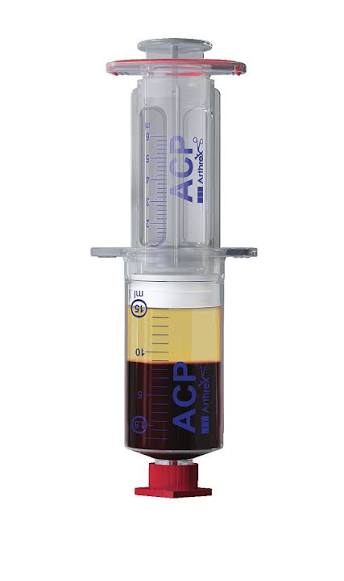
The clinic uses the branded Arthrex ACP system to prepare autologous plasma, rather than kits of unknown origin. Choosing a specific system means an identifiable manufacturer and defined instructions for use.
Blood collection, preparation and injection are carried out with strict adherence to safety standards, antisepsis and aseptic technique. Equipment quality and correct use are essential, but they do not eliminate the risks of an injection or guarantee the treatment outcome.
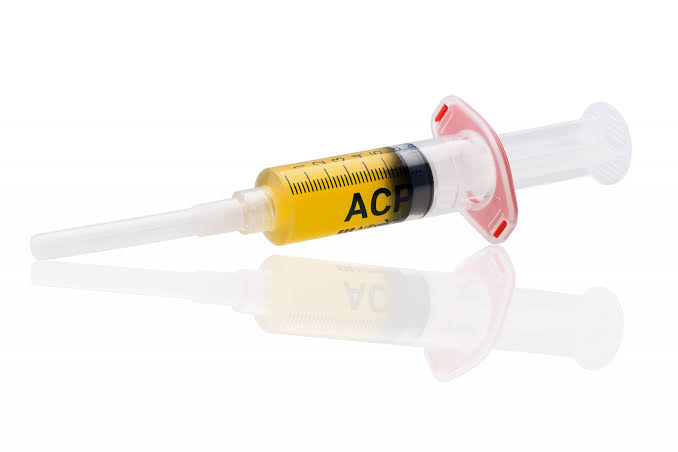
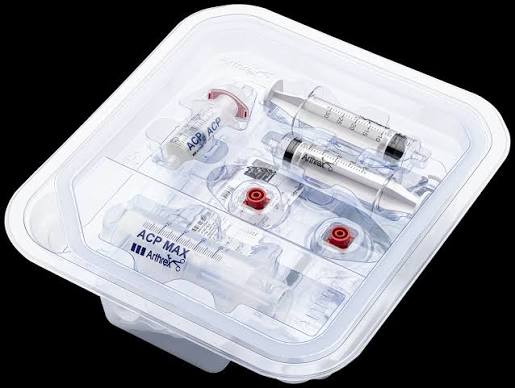
ACP Max: an option for particular treatment needs
The Arthrex ACP Max system is a different PRP preparation system. It uses a larger blood draw and double centrifugation, with the ability to prepare plasma with a higher platelet concentration.
At the clinic, it may be selected individually for particular, more difficult cases, as well as for athletes or patients with high functional demands, when justified by clinical assessment. The choice is based on the specific condition, previous treatments and rehabilitation goals — not activity level alone.
This treatment has a higher cost than ACP. Suitability, alternatives and cost are discussed before treatment.
A higher platelet concentration does not in itself mean a better or guaranteed outcome. The same strict standards of safety, antisepsis and aseptic technique apply.
How the treatment is carried out
- Symptoms, the examination and available imaging are assessed.
- Blood is collected and the plasma is prepared using the Arthrex ACP system.
- The injection is given under aseptic conditions. Ultrasound guidance is used where needed.
- Instructions are provided for activity and follow-up.
Report all medicines and any health problems. Do not change anticoagulants, aspirin or other prescribed medication yourself; instructions should be agreed with your treating doctor.
Sessions and returning to activity
Temporary pain may occur in the area. Return to exercise and physiotherapy are adapted to the condition and the response, not simply to the date of the injection. PRP does not replace an appropriate rehabilitation programme.
There is no number of sessions that suits everyone. Reassessment determines whether continuing is worthwhile. Read also: PRP for the knee: how many sessions are needed? (In Greek)
Risks and symptoms not to ignore
Using your own blood does not eliminate risks. As well as local pain, an injection can cause bleeding, infection or injury to nearby tissues.
Fever together with rapidly increasing pain, redness or swelling after an injection requires immediate medical assessment. Severe deterioration or difficulty breathing require emergency help. In Greece, call 166 or go to a hospital Emergency Department.
A practical guide to your next step
PRP or hyaluronic acid for the knee? (In Greek)
A comparison of PRP and hyaluronic acid for knee osteoarthritis: differences, scientific evidence, limitations and questions to ask before deciding.
Frequently asked questions
Does PRP regenerate cartilage?
Is it suitable for every type of knee pain?
Are three sessions always necessary?
Scientific sources and system information
- Arthrex — ACP Max: system information from the manufacturer
- AAOS — Platelet-Rich Plasma (PRP)
- ESSKA–ICRS, 2024 — PRP for knee osteoarthritis: consensus on indications
- NICE — PRP for knee osteoarthritis: limitations of the evidence
- Northern Care Alliance NHS — PRP: procedure and aftercare
- Arthrex — ACP: system information from the manufacturer

Could PRP have a place in your treatment?
Discuss your diagnosis, previous treatments and the options that suit your needs.