info@petridis-orthopedikos.gr
Call AthensCall Loutraki
Georgios Petridis, MD, MScOrthopaedic Surgeon Book an Appointment
Hip hub

Hip: Pain, Conditions, Replacement and Recovery

An organised guide to hip pain (In Greek), accurate diagnosis and treatment options — with a particular focus on robotic-assisted hip replacement, the AMIS anterior approach and the management of hip fractures.

Start with your symptoms

Where is the pain, and what do you find difficult?

Hip pain is not always felt directly over the joint. Its location, relationship to walking and effect on sleep or everyday movements help guide the assessment.

What else do you notice?

How the assessment is organised → (In Greek)
!

When is urgent assessment needed?

Severe pain after a fall or injury, inability to walk or bear weight, visible deformity, shortening or outward rotation of the leg, and a warm, swollen hip with fever require emergency medical assessment. If a fracture is suspected, do not wait for a scheduled appointment — go to a hospital Emergency Department or call 166.

Hip conditions

The most common causes of pain and restricted function

Pain may arise from the joint itself, the surrounding tendons and soft tissues, the shape of the hip or an acute injury. Correct classification helps avoid unnecessary investigations and poorly targeted treatment.

Degenerative and inflammatory conditions

  • Hip osteoarthritis (In Greek)

    Groin pain, stiffness and gradually increasing difficulty walking.

  • Osteonecrosis of the femoral head

    Disruption of the bone's blood supply that requires early assessment of its stage.

  • Inflammatory arthritis

    Assessment in collaboration with the treating rheumatologist when required.

Impingement and the labrum

  • Femoroacetabular impingement (In Greek)

    Pain with deep bending, rotation or prolonged sitting.

  • Labral tear

    Groin pain, clicking or a mechanical sensation in some cases.

  • Adult hip dysplasia

    An abnormality of hip shape that requires specialist assessment.

Diagnosis

Treatment is not decided on a single X-ray or MRI alone

Imaging findings must be considered alongside the location of pain, movement, walking, function and the patient's goals.

“Accurate diagnosis distinguishes whether pain comes from the joint, the tendons or even the lower back.”

The examination guides both the choice of imaging and the appropriate treatment plan.

1

History

Onset, location, night pain, previous injury and functional limitations.

2

Clinical examination

Gait, range of movement, strength, specific tests and assessment of neighbouring areas.

3

X-rays

Often the main first step for arthritis, hip shape or a fracture.

4

MRI or CT

Selected when answers are needed about an occult fracture, osteonecrosis, cartilage, tendons or three-dimensional surgical planning.

Treatment pathway

From non-surgical care to a surgical plan

Appropriate management depends on the diagnosis, severity of symptoms, function, general health and the outcome of previous treatments.

1
2
3

Surgical management

Hip replacement is discussed when pain and restricted function substantially affect everyday life and appropriate non-surgical treatment is insufficient. Fractures follow a separate emergency pathway.

Modern hip replacement with individual planning

The aim is to restore function safely using a technique suited to the patient's anatomy, diagnosis and needs. Technology and surgical approach are tools within an overall plan — not automatic choices for everyone.

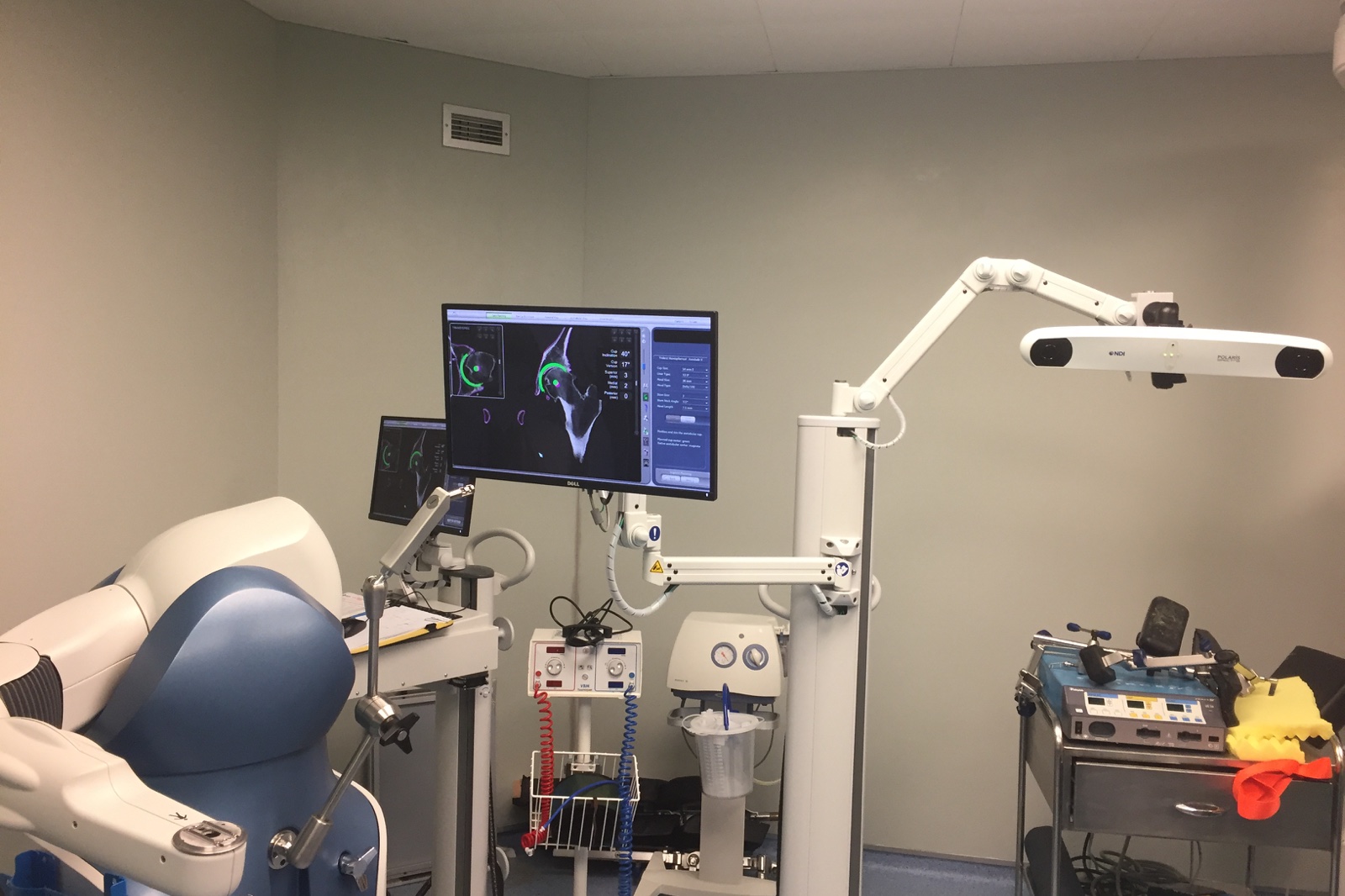
Robotic-assisted hip replacement equipment with a three-dimensional planning display
Robotically assisted hip replacementEquipment for surgical planning and intraoperative guidance.

Other hip procedures

Hip arthroscopy is used for selected conditions within the joint. It is not among the procedures performed by this doctor.

Trauma & emergency care

Hip fractures: prompt assessment and organised surgical care

Fractures of the femoral neck and trochanteric region are serious injuries, particularly in older adults. Treatment is organised in hospital, aiming for timely surgery when indicated and safe mobilisation.

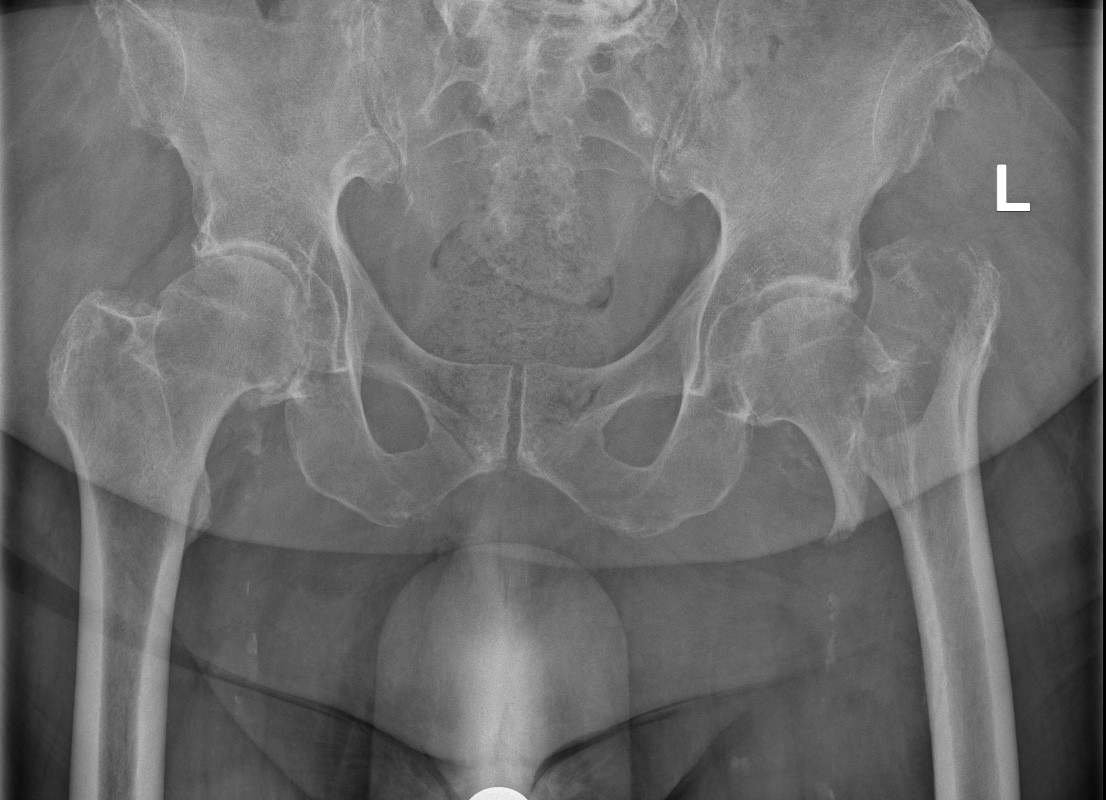
Pelvic X-ray showing a fracture in the region of the left hip
Pelvic X-ray showing a fracture in the region of the left hip. An illustrative clinical image.

From X-ray to treatment plan

Management is not determined by the image alone. The type and displacement of the fracture, age, function before the injury and overall health are considered together.

  • Prompt pain relief and comprehensive preoperative assessment
  • Selection of appropriate internal fixation or joint replacement
  • Early mobilisation and a rehabilitation plan

Femoral neck fracture

The choice between internal fixation, hemiarthroplasty and total hip replacement depends on displacement, age, function and overall health.

Intertrochanteric fracture

Usually treated with internal fixation. The implant type is determined by the shape and stability of the fracture.

Periprosthetic fracture

Specialist planning is needed, based on the fracture location, stability of the prosthesis and bone quality.

!
Suspected fracture after a fall?

If there is severe pain or you cannot get up or bear weight on the leg, do not wait for a clinic appointment. Call 166 or go immediately to a hospital Emergency Department.

Recovery

What to expect after surgery

Recovery varies with the procedure, bone quality, general health and each patient's progress. The information below describes general principles and does not replace your individual postoperative instructions.

After total hip replacement

MobilisationUsually starts early, with a safe technique and an appropriate walking aid.
WalkingWeight-bearing is determined by the procedure and the surgical team's instructions.
DrivingWhen control is safe, reaction times are adequate and medical clearance has been given.
ActivityIncreased gradually, aiming for independence, strength and stability.
Georgios Petridis, MD, MSc, Orthopaedic Surgeon
Hip surgery

Georgios Petridis, MD, MSc

Orthopaedic Surgeon trained in Greece and the United Kingdom, certified in Stryker MAKO robotic-assisted joint replacement and in the AMIS direct anterior approach to the hip.

Robotic-assisted hip replacementAMIS certificationTotal hip replacementManagement of hip fractures
Meet the doctor
Frequently asked questions

Answers at a glance

Where is pain from the hip usually felt?
Pain arising from the hip joint is often felt in the groin or front of the thigh and may radiate as far as the knee. Pain on the outer side of the hip or in the buttock may have a different origin, so clinical assessment is needed.
Is an MRI always needed for hip pain?
No. The history, clinical examination and appropriate X-rays are often the first step. MRI or CT is requested when there is a specific diagnostic question or when the result could change management.
When is hip replacement considered?
When pain, stiffness and functional limitations substantially affect quality of life and appropriate non-surgical care does not provide adequate relief. The decision is based on the clinical picture and a shared discussion with the patient, not on an X-ray alone.
What is robotic-assisted hip replacement?
It is a joint replacement procedure combining preoperative three-dimensional planning based on CT imaging with robotic assistance in carrying out the plan. The surgeon remains responsible for all decisions and assesses whether the technology is appropriate for the individual patient.
What is the AMIS technique in hip replacement?
AMIS is a standardised direct anterior approach for total hip replacement, using a specific technique and instruments. Its suitability depends on anatomy, diagnosis, any previous operations and the overall surgical plan.
How long does rehabilitation after hip replacement take?
Mobilisation usually starts early, following instructions from the surgical and physiotherapy team. Walking without an aid, driving, work and exercise are resumed gradually and individually, depending on the procedure, general health and the patient's progress.
What should I do if I suspect a hip fracture?
Severe pain after a fall, inability to bear weight or walk, deformity, or shortening and outward rotation of the leg require immediate assessment in a hospital Emergency Department. Do not wait for a scheduled appointment; call 166 in Greece if an ambulance is needed.

Medical references: NICE — Osteoarthritis · NICE — Hip fracture · AAOS — Hip osteoarthritis · AAOS — Hip fractures · ACR — Imaging for chronic hip pain

Clinics in Athens & Loutraki

Need an assessment or a second opinion on your hip?

For chronic pain, osteoarthritis or a discussion about robotic-assisted hip replacement and AMIS, you can arrange an assessment tailored to your needs. If a fracture is possible after a fall, go immediately to a hospital Emergency Department.