info@petridis-orthopedikos.gr
Call AthensCall Loutraki
Georgios Petridis, MD, MScOrthopaedic Surgeon Book an Appointment
Shoulder hub

Shoulder: Pain, Conditions, Treatments and Recovery

An organised guide to help you start with shoulder pain (In Greek), understand what your symptoms may mean and explore treatment options — from non-surgical care to arthroscopy, joint replacement and rehabilitation.

Start with movement and function

When, and with which movements, does the pain occur?

The pattern of pain or restricted movement can provide important information about the possible cause. Notice what you find difficult and explore the related information.

!

When is a more urgent assessment needed?

Inability to raise the arm after an injury, visible deformity, dislocation, marked swelling, fever with redness, progressive muscle weakness or numbness require prompt medical assessment.

Shoulder conditions

The most common shoulder conditions

Shoulder conditions may be related to injury, tendon tears, instability, inflammation, stiffness or arthritis.

Stiffness and overuse conditions

i

Sudden severe pain with restricted movement?

Read about Calcific tendinitis (In Greek) and other possible causes of acute shoulder pain.

Diagnosis

Treatment is not decided on MRI alone

Findings must be considered alongside the history, clinical examination, strength, range of movement and the patient's functional needs.

“Imaging is part of the diagnosis, not a diagnosis on its own.”

An imaging finding may be important, symptomatic, secondary or even unrelated to the main pain. Correlation with the clinical assessment determines the next step.

1

History

When it started, which movements hurt, and whether there is night pain or an injury.

2

Clinical examination

Assessment of active and passive movement, strength and stability, with specific clinical tests.

3

X-rays and ultrasound

Assessment of bones, arthritis and calcification, and dynamic assessment of tendons.

4

MRI or CT

When there is a specific question about tendons, the labrum, bone or preoperative planning.

Treatment pathway

Treatment is planned individually

Not every patient follows the same pathway. The choice of treatment is based on the diagnosis, severity of symptoms, function and each patient's personal goals.

1

Non-surgical management

Exercise, physiotherapy, activity modification and pain management.

Shoulder exercisesPhysiotherapyLoad modification
2
3

Surgical management

Arthroscopy or joint replacement is considered when there is a clear indication and substantial functional limitation.

Shoulder arthroscopyTendon repairStabilisationShoulder replacement
Ultrasound-guided injections

Precise treatment with ultrasound guidance

PRP • ACP • Hyaluronic acid • Corticosteroid injections • Barbotage

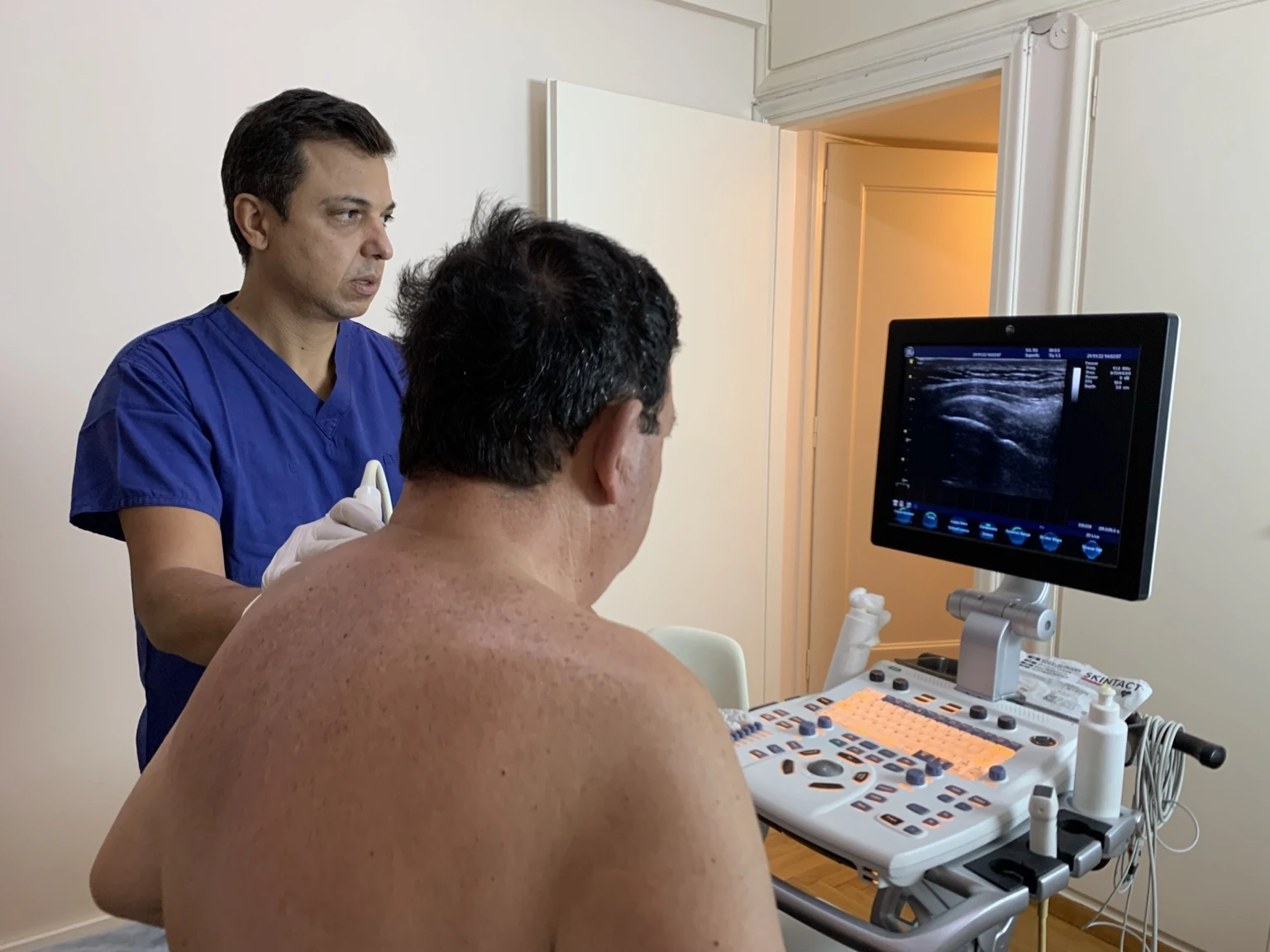
In selected cases, ultrasound allows direct visualisation of the tendons, bursae and shoulder joint during treatment.

This allows the needle to be guided precisely to the intended site when this is important for the effectiveness and safety of the intervention.

The technique is used only when there is a clear indication. It is part of an individual treatment strategy, not a separate treatment in its own right.

Precise targeting

Treatment is delivered to the anatomical area that is the intended target.

Real-time imaging

The needle's position is monitored in real time during the procedure.

Modern injection treatments

PRP / ACP, hyaluronic acid, corticosteroid injections and barbotage where indicated.

Individual selection

The technique is selected according to the examination, imaging and the patient's needs.

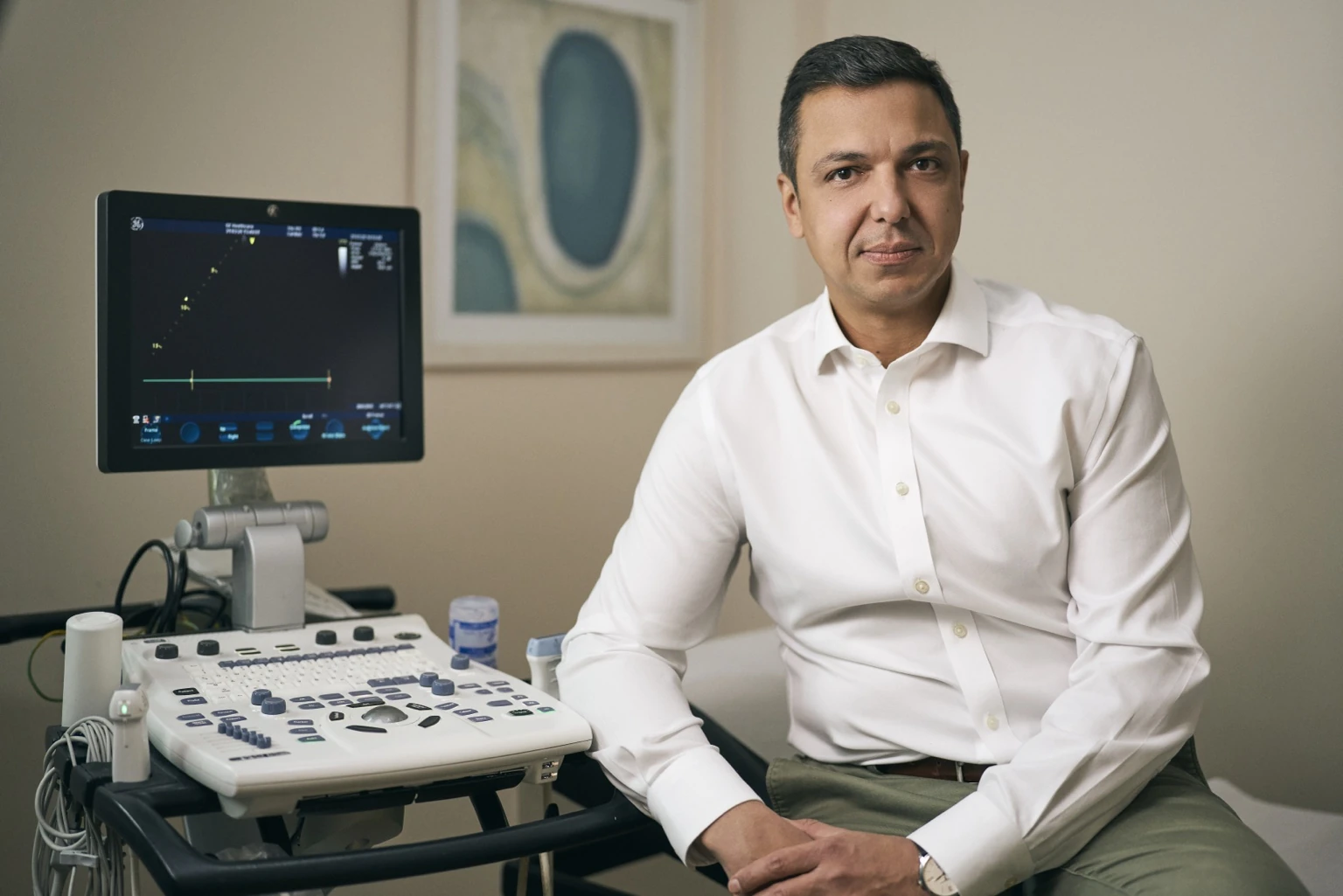
Georgios Petridis beside the clinic's ultrasound scanner
PRP / ACP Hyaluronic acid Barbotage Corticosteroid injection
Surgical options

Shoulder arthroscopy and shoulder replacement

Surgery is recommended when non-surgical treatment is insufficient or when the nature of the damage requires an operation. The aim is to reduce pain, restore function and support a safe return to everyday activities or sport.

Recovery

What to expect after each procedure

Recovery times vary with the procedure and the individual. The guides below explain what usually applies to walking, driving, work, exercise and return to sport.

After shoulder arthroscopy

SlingUsed according to the procedure.
PainGradually brought under control during the first few days.
MovementStarts according to the rehabilitation protocol.
WorkThis differs between office and manual work.
Georgios Petridis, MD, MSc, Orthopaedic Surgeon
Shoulder expertise

Georgios Petridis, MD, MSc

Orthopaedic Surgeon trained in Greece and the United Kingdom, with a particular focus on shoulder arthroscopy, rotator cuff tears, instability, calcific tendinitis and shoulder replacement.

Shoulder arthroscopyRotator cuffShoulder instabilityShoulder replacement
Meet the doctor

Injured during sport?

Explore the approach to sports injuries, from assessment to a gradual return to activity.

Frequently asked questions

Answers at a glance

When should shoulder pain be assessed?
When it persists, causes night pain, significant weakness, restricted movement or instability, or started after an injury.
Is an MRI always needed for the shoulder?
No. The history, clinical examination, X-rays and often ultrasound may be enough for the first diagnostic step.
Does a rotator cuff tear always need surgery?
No. The decision depends on the size and type of tear, weakness, age, activity level and response to non-surgical treatment.
When can a corticosteroid injection help?
It may provide temporary relief in selected inflammatory conditions when used for an appropriate indication and with a targeted technique.
What is barbotage?
It is an ultrasound-guided technique for washing out and removing calcium deposits in selected cases of calcific tendinitis.
When is shoulder replacement considered?
When there is advanced arthritis or irreparable rotator cuff damage with significant pain and functional limitation.
Clinics in Athens & Loutraki

Need an assessment or a second opinion on your shoulder?

If you have persistent pain, stiffness, weakness, a recent MRI, or are considering treatment or surgery, you can arrange an individual assessment.