
Acute injury
A fall, collision or sudden twist can cause a sprain, muscle strain, ligament tear, dislocation or fracture.
An injury is not only about pain. It affects movement, confidence in your body and the activity you want to return to — whether you compete professionally or take part for enjoyment.
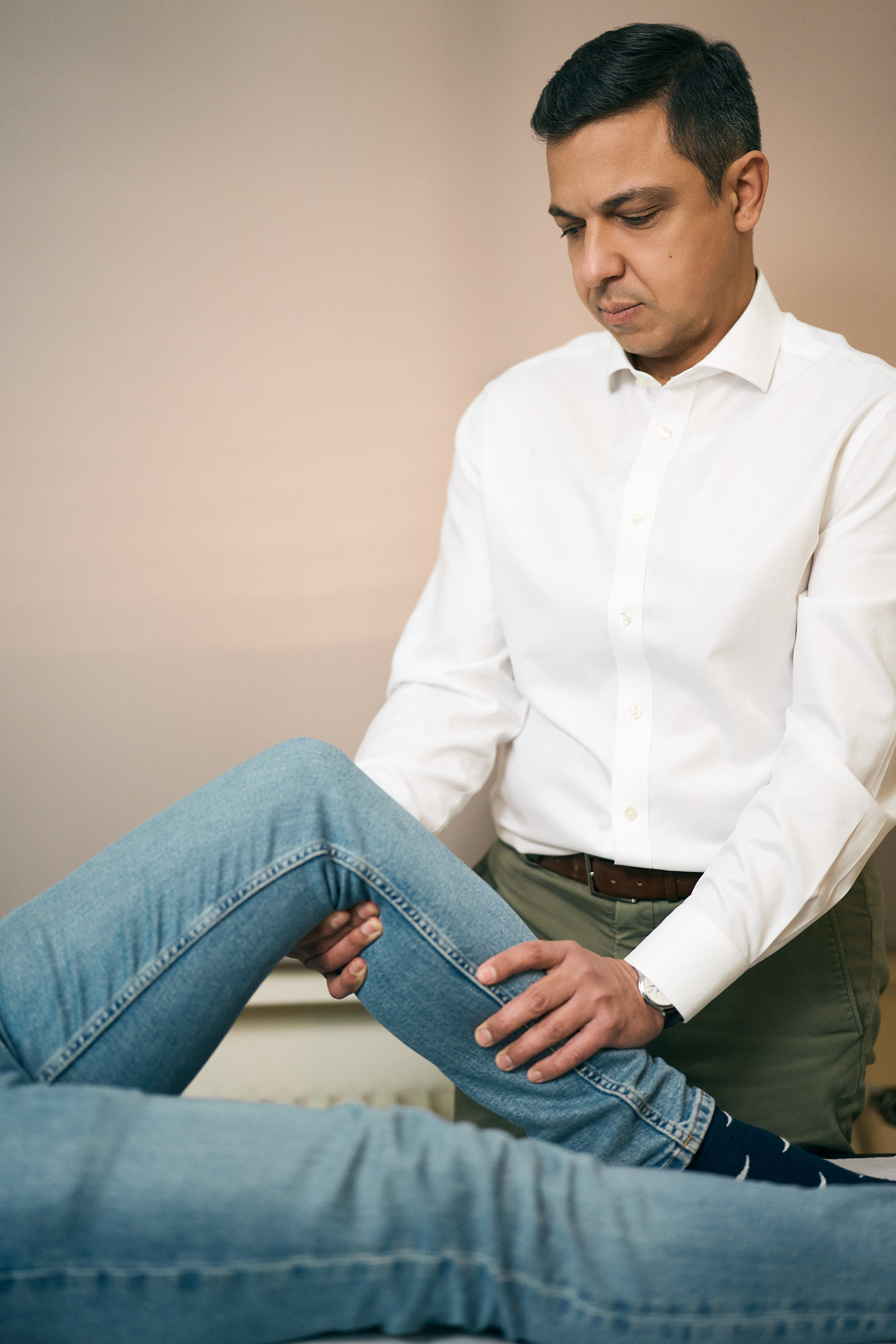
A fall, collision or sudden twist can cause a sprain, muscle strain, ligament tear, dislocation or fracture.
Repetitive loading and a sudden increase in training can cause gradually developing pain in tendons, muscles or bones. The absence of a specific accident does not rule out an injury.
Information about meniscal tears (In Greek), anterior cruciate ligament tears (In Greek) and other knee conditions.
See shoulder instability (In Greek), rotator cuff tears (In Greek) and the shoulder section.
Pain may be related to muscles, tendons or the joint. The hip section helps explain the different causes.
Start with conditions or symptoms. The location of pain alone is not enough for a diagnosis.
We discuss the mechanism of injury, your training, recent changes in load and your medical history. Movement, strength and stability are examined. An X-ray or MRI is chosen according to the clinical question, not automatically for every symptom.
Bring previous test results to your appointment and note when pain occurs and which activity it limits. See the information about the Athens clinic and the Loutraki clinic.
Significant or increasing swelling, severe pain and inability to bear weight on the leg need prompt medical assessment. Stop the activity causing the pain; do not continue playing to ‘test’ the joint.
Deformity after an injury, numbness, or a limb becoming cold or changing colour require emergency help. In Greece, call 166 or go to a hospital Emergency Department. Do not wait for a scheduled appointment.
Depending on the injury, the plan may include protecting the area, modifying activity, managing pain and structured rehabilitation with exercises. Immobilisation, when needed, has a specific purpose and duration.
Surgery is considered for selected injuries, based on the diagnosis and functional demands. See the non-surgical options, knee arthroscopy and shoulder arthroscopy (In Greek). Surgery does not remove the need for rehabilitation.
Less pain alone is not enough for a full return to competition. Healing, movement, strength, functional tests, the demands of the sport and psychological readiness are considered together.
The steps are agreed with the patient and the rehabilitation team. There is no single timetable or test that guarantees zero risk of reinjury.
Gradually increasing the load, using appropriate technique and equipment, and avoiding a sudden return to previous intensity can reduce the risk of a new injury. Previous injury is taken into account when planning training. No practice eliminates every risk.

Bring your test results and discuss the difficulties you face in daily life and the treatments you have already tried.