
Meniscal tear
Selected tears may need repair or removal of the part that cannot be repaired. The aim is to preserve functioning meniscal tissue wherever possible.
See the guide to meniscal tears (In Greek)Arthroscopy allows us to examine and treat specific problems inside the knee using a camera and fine instruments through small incisions. It is not the same operation for every type of pain, nor a general ‘clean-up’ of the joint.
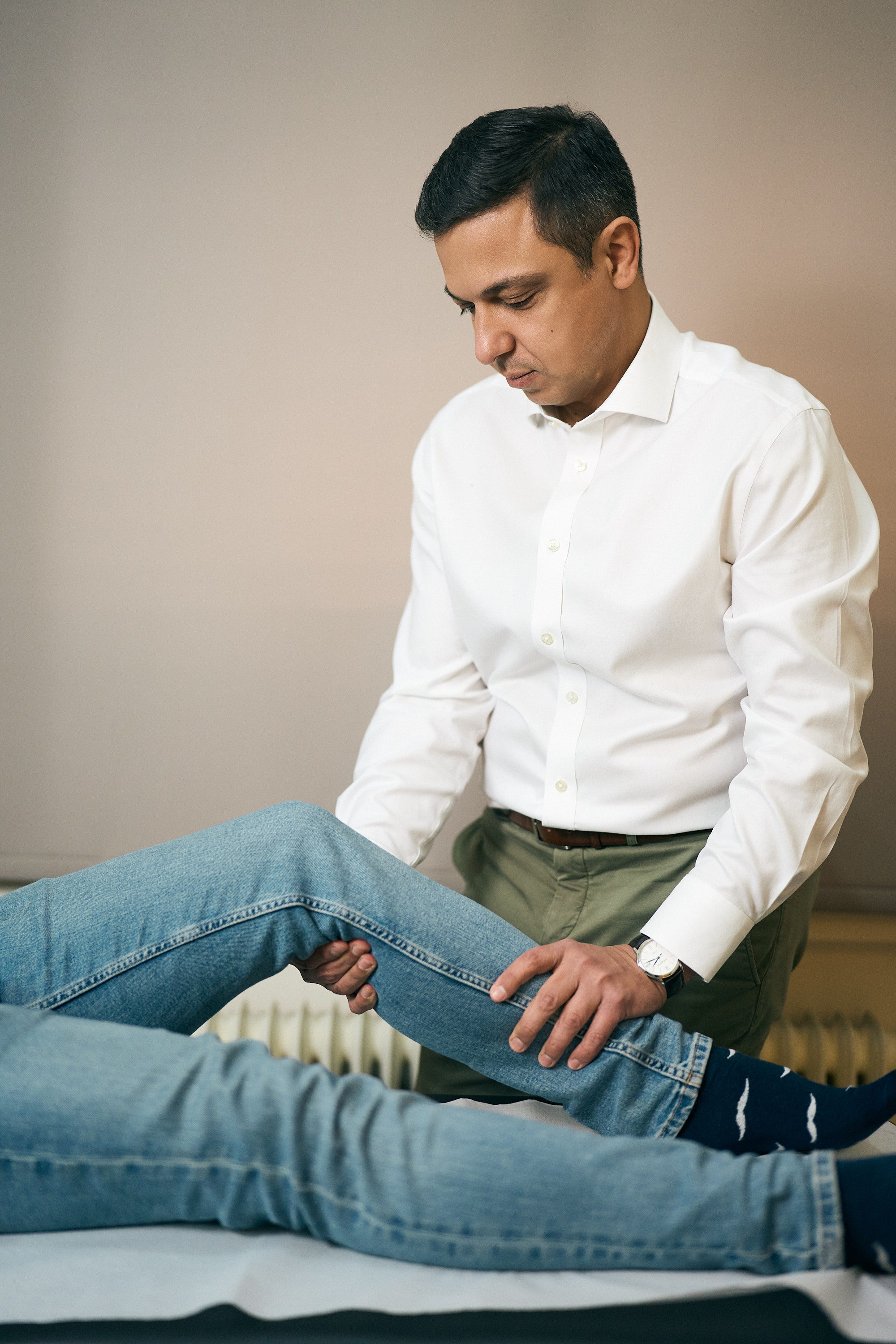
Selected tears may need repair or removal of the part that cannot be repaired. The aim is to preserve functioning meniscal tissue wherever possible.
See the guide to meniscal tears (In Greek)An arthroscopic technique is used to reconstruct the ligament when indicated. This is not a simple clean-up.
See anterior cruciate ligament tears (In Greek)Loose bodies or selected localised cartilage defects may be treated arthroscopically, depending on their characteristics.
See cartilage injuries (In Greek)The decision is not based on an MRI alone. If the knee has true locking that blocks movement (In Greek), prompt assessment is needed. A simple ‘click’ does not in itself mean surgery is required.
See how meniscal repair (In Greek) is performed, when it is possible and why it needs different rehabilitation from partial meniscectomy.
See all-inside anterior cruciate ligament reconstruction (In Greek): what changes in the operation, what its limitations are and how rehabilitation is planned.
For an overview of the technique, read what arthroscopy is and when it is needed (In Greek), from preparation to the basic principles of rehabilitation.
Arthroscopic lavage or general debridement is not recommended as a treatment for knee osteoarthritis (In Greek). Arthroscopy does not renew worn cartilage and does not replace the overall plan for managing arthritis.
For degenerative meniscal tears, structured exercise and physiotherapy are often the first option. In the ESCAPE trial, involving patients aged 45–70 with a degenerative tear, physiotherapy was not inferior to partial meniscectomy for function at five years.
This does not mean all tears are treated in the same way. A displaced traumatic tear with true locking needs a different assessment. Failure of a general treatment, without a clear diagnosis, is not in itself enough to justify surgery.
The team provides individual instructions for preoperative assessment, fasting and medicines. Report allergies, previous blood clots and all your medication. Do not stop medicines yourself.
Anaesthesia is chosen with the anaesthetist. The camera and instruments are introduced through small portals and the agreed treatment is carried out.
Many patients return home the same day once they meet the criteria for safe discharge. The duration, need for a hospital stay and when weight-bearing is allowed are not the same for every operation.
Possible risks include infection, blood clots, bleeding into the joint, stiffness and persistent symptoms. Small incisions do not mean zero risk or guaranteed relief.
Mobilisation may progress more quickly, depending on swelling, strength and the instructions provided.
Healing needs protection. Restrictions on weight-bearing and knee bending may be required.
A specific programme follows for that reconstruction or repair, rather than the timetable for a straightforward arthroscopy.
Follow the written plan for wound care, medicines, movement and follow-up. Returning to work, driving or sport depends on function and the demands of the activity, not only on how many days have passed.
Bring your test results and describe when the problem started, whether there was an injury and which treatments you have tried. We distinguish pain, swelling, instability and true locking so that we can discuss suitable options.
If you do not yet have a diagnosis, start with the guide to knee pain (In Greek) or the section on knee swelling (In Greek).
After surgery, fever, increasing pain, marked redness or wound discharge require immediate contact with the team that performed your operation. New calf pain and swelling also need urgent assessment. Do not wait for your scheduled follow-up.
Sudden breathlessness or chest pain, particularly together with pain and swelling in the leg, require emergency help. In Greece, call 166 or go to a hospital Emergency Department. Do not drive.
Recovery after knee arthroscopy (In Greek)
How recovery after knee arthroscopy varies by procedure: walking, physiotherapy, returning to activities and warning signs.

Orthopaedic Surgeon with a clinical focus on knee conditions, sports injuries, arthroscopy and joint replacement.
View biographyDiscuss your symptoms and test results at an individual consultation.